How Is Traditional Kala Kand Prepared? Inside the Slow-Simmered Craft
How is traditional Kala Kand prepared?
Traditional Kala Kand is prepared in three unhurried stages: slow-simmering milk in a wide heavy kadhai, folding in delicate milk curds to form soft grainy danedar texture, and gently setting and garnishing the warm mixture with cardamom, pistachios, and rose petals.
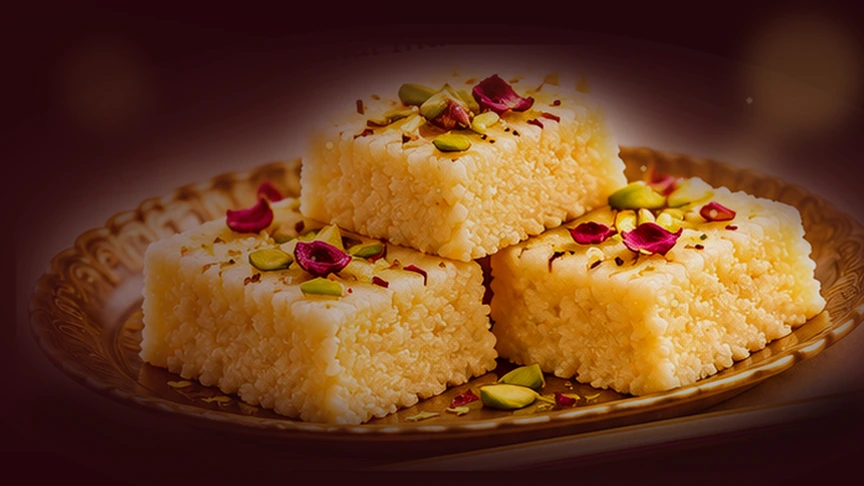
Stage 1: Slow Reduction in a Wide Kadhai
Traditional Indian halwais favour wide, thick-bottomed vessels so moisture evaporates evenly without scorching the milk solids. Continuous, rhythmic stirring with a flat ladle prevents sticking and keeps the reduced milk bright, clean, and creamy.
Stage 2: Building the Danedar Grain
Timing is everything. Introducing fresh milk curds or gentle curdling at the right reduction stage creates uniform, tender granules suspended in velvety reduced milk. Overcooking makes the sweet dry and crumbly; undercooking prevents clean squares from setting.
Stage 3: Resting, Cutting & Garnishing
Once thickened to a cohesive yet moist mass, cardamom is folded in and the Kala Kand is pressed evenly into trays, crowned with slivered green pistachios and dried rose petals, and rested until it slices cleanly into soft celebratory squares.