Regular vs. No-Added-Sugar Indian Sweets: What Consumers Should Know
What is the difference between regular and no-added-sugar sweets?
Regular Indian sweets use added sugar for sweetness and structure, whereas no-added-sugar sweets omit added refined sugar during preparation — however, milk-based sweets still naturally contain milk sugars (lactose) and carbohydrates, so 'no added sugar' is not the same as 'sugar-free' or universally diabetic-safe.
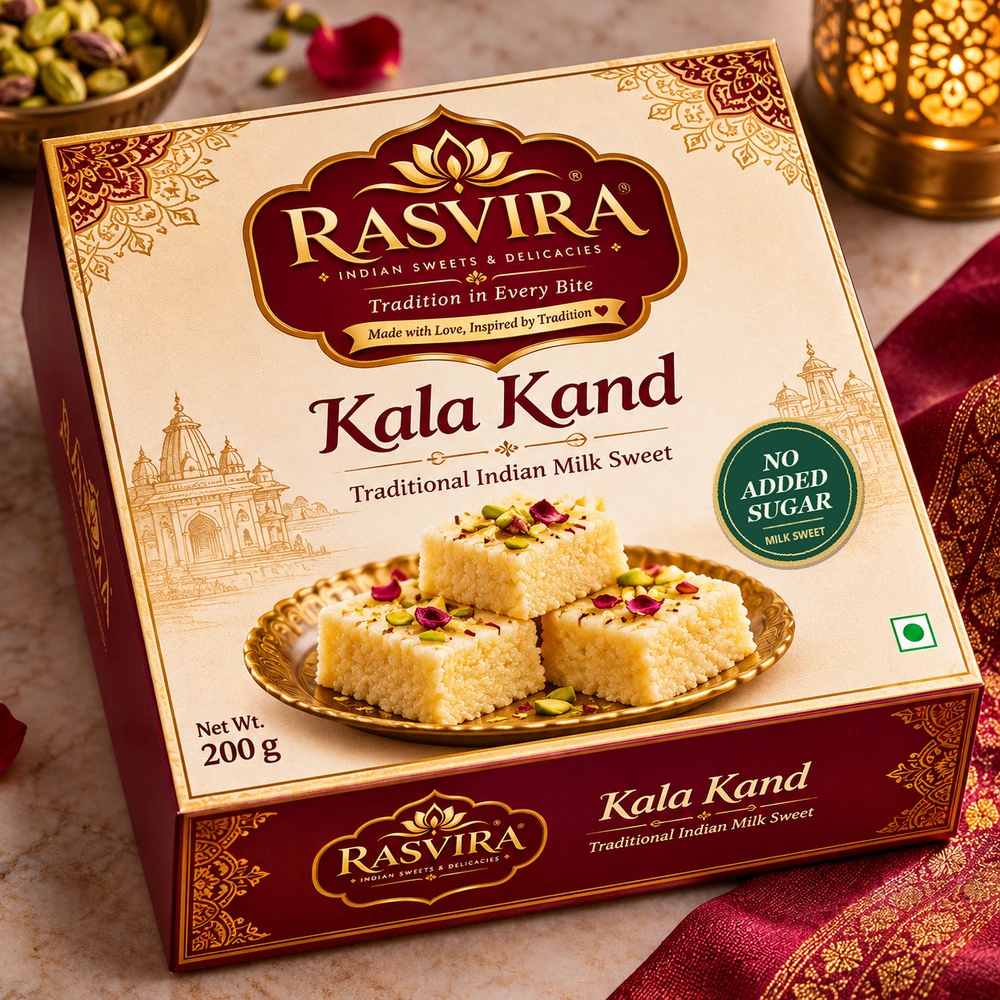
'No Added Sugar' vs. 'Sugar-Free' Under FSSAI Norms
In India, food nutrition claims are governed by FSSAI regulations. 'No added sugar' indicates that no sugars were added during manufacture, while 'sugar-free' has a strict maximum total-sugar threshold per 100 g.
Because milk naturally contains lactose, a milk sweet prepared without added sugar still has naturally occurring sugars and carbohydrates that must be transparently disclosed on the nutrition table.
Why RASVIRA Avoids Blanket Medical Claims
No sweet brand should advertise a milk confection as safe for every diabetic individual. Suitability depends on the full nutritional composition, portion size, and personal medical guidance.
At RASVIRA, our No-Added-Sugar Kala Kand terminology and nutrition facts undergo formal formulation and regulatory review prior to commercial publication so customers and families can make informed decisions.